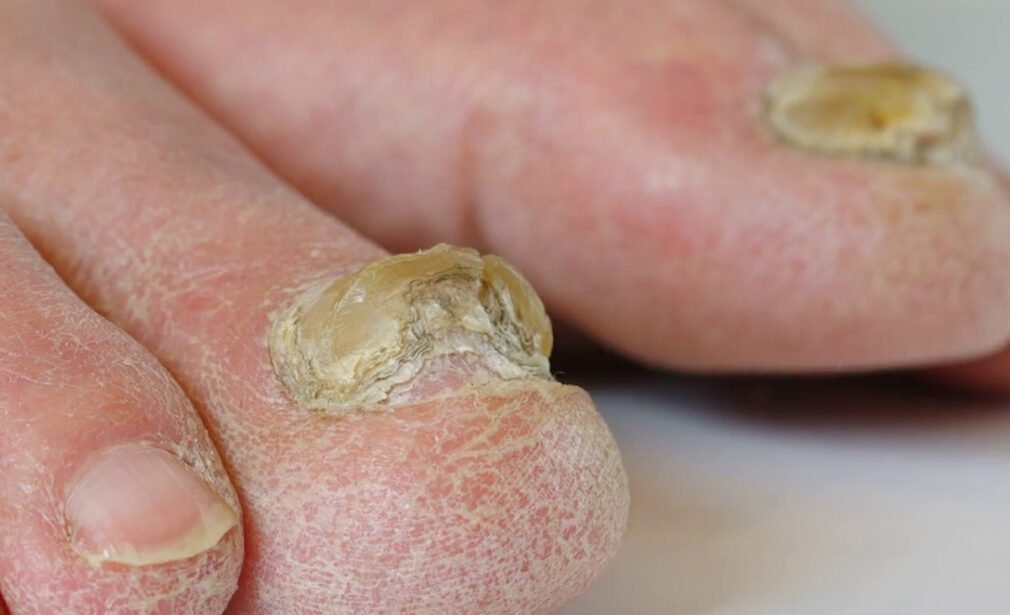
What is Fungal Nail

A common nail infection is nail fungus. Under the tip of your fingernail or toenail, it starts as a white or yellow-brown patch. The nail may get discoloured, thicken, and crumble at the edge as the fungal infection spreads deeper. Several nails may be impacted by nail fungus.

Simple steps to have Healthy Feet

Don’t wait for your foot condition to worsen. Book an appointment today with one of our highly qualified and experienced podiatrists to keep your feet healthy.

Frequently asked questions

Here are some useful information for you regards to Fungal Nail.

  • Nail fungus is caused by various fungal organisms (fungi). The most common is a type called dermatophyte. Yeast, bacteria and molds also can cause nail infections. The discoloration from a bacterial infection tends to be green or black.

    Fungal infection of the foot (athlete’s foot) can spread to the nail, and a fungal infection of the nail can spread to the foot. You can also get the infection from contact with spaces where fungi can thrive, such as the floor tile in a gym shower or inside dark, sweaty, moist shoes.

  • A fungal nail infection can affect anyone. Some people, such as older adults and those with the following conditions, may be more susceptible to developing a fungal nail infection than other people.

    Other regions of the body with fungal skin infections On occasion, a bacterial infection can develop on top of a fungal nail infection and result in significant illness. People with diabetes or other illnesses that impair the body’s ability to fight infection are more likely to experience this.

The majority of fungus nail infections are not dangerous. However, some people could feel pain or worry about how their nails look.

Nails that have been infected by fungi may become thick, brittle, or cracked. Another possibility is for the nail to detach from the nail bed.

Athlete’s foot, ringworm on the foot, or tinea pedis are all terms used to describe a fungal skin infection on the foot, particularly between the toes, that frequently coexists with fungal toenail infections.

  • The most effective course of treatment for fungus nail infections is to begin early. The most effective treatment for fungal nail infections is frequently oral administration of prescription antifungal medications. In extreme circumstances, a medical practitioner might fully remove the nail. The illness may take several months to a year to clear up.

    Fungal skin infections and fungal nail infections can often occur together. A fungal infection can spread from one location to another if it is not treated. To ensure that all fungal infections are correctly treated, you should visit our clinic so that we can assess how best to treat the infection. 

    Fungal nail infections can recur even after therapy. People who have diseases like diabetes, which increases their risk of developing a fungal nail infection, are more prone to experience this. Call in to see one of our podiatrists if you think an infection has reappeared. 

    • Maintain clean, dry hands and feet
    • Keep toenails and fingernails neat and short
    • Avoid going barefoot in places like baths or locker rooms
    • Never lend out your nail clippers to anyone